
The yellow problem: lead chromate and why Lakadong turmeric needs a traceable origin
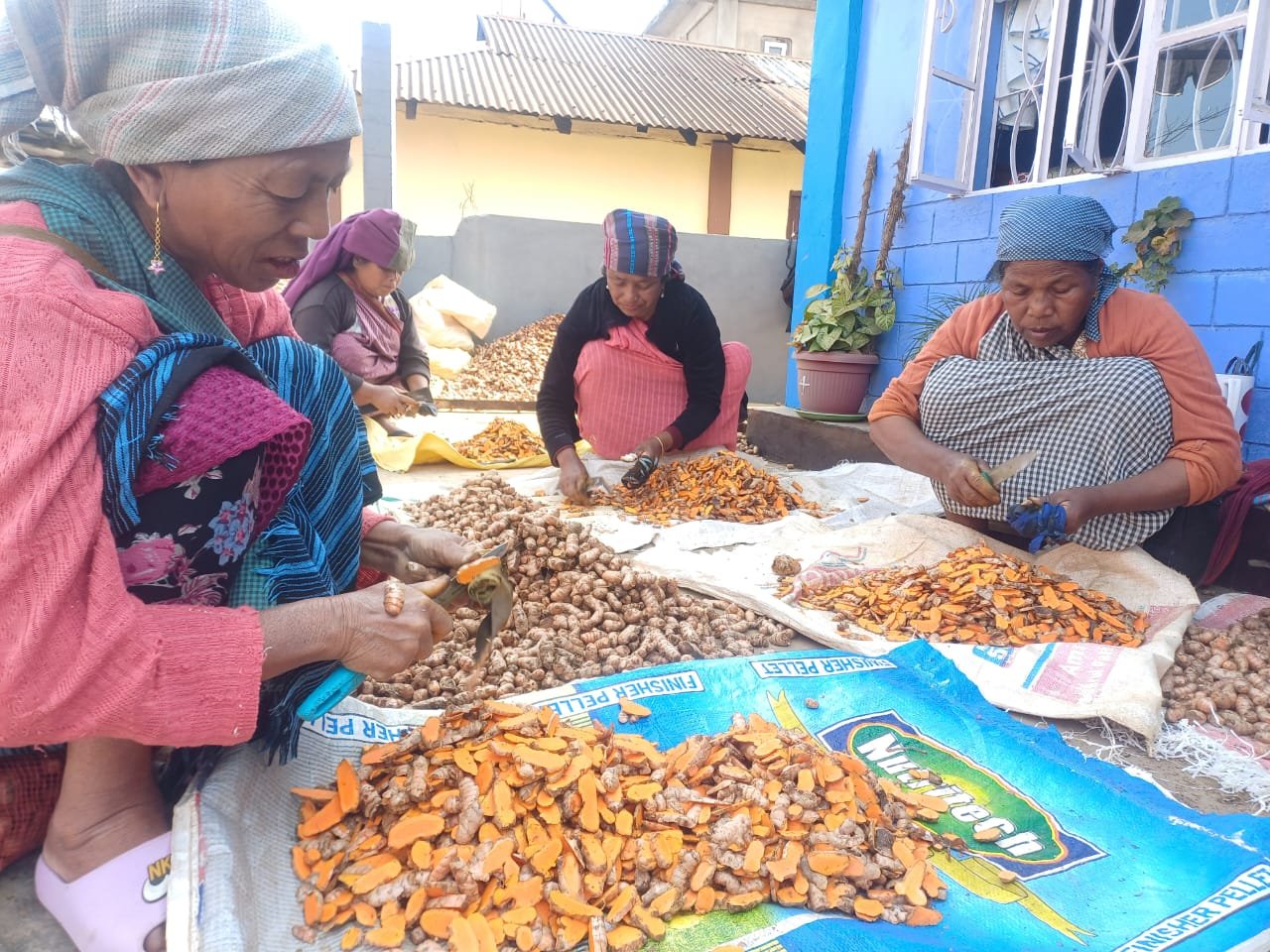

Most people buy turmeric with their eyes. A brighter yellow looks fresher and stronger, so it sells faster and for more. For decades, that habit has rewarded anyone willing to cheat on colour.
The cheapest way to cheat is lead chromate. It is an industrial pigment, the same bright yellow used in paint and plastics. Dusted onto dull or poor-quality turmeric roots during polishing, it makes them look like a much better crop. Researchers have traced the practice in South Asia back to at least the 1980s.
How common is it?
More common than most buyers would guess. A Stanford-led study published in 2024 tested turmeric bought in 23 cities across India, Pakistan, Nepal and Sri Lanka between December 2020 and March 2021. Samples from Patna contained up to 2,274 micrograms of lead per gram. India's food regulator, FSSAI, allows 10. Samples bought in Guwahati reached 127 micrograms per gram, and the researchers reported that both the Patna and Guwahati samples were sourced from Bihar. Polished whole roots were the worst, followed by loose powder.
A larger follow-up across eastern India, published in 2026, collected 503 samples from 34 cities. Thirty per cent were over the legal limit, and the highest reading in Bihar was 6,416 micrograms per gram, more than 600 times what the law allows.
There is no known safe level of lead in the body. It builds up in bone, and in children it is linked to lower IQ and learning and behaviour problems. Turmeric goes into food every day, often in homes with small children, which is why this matters far beyond the spice trade.
It can be fixed
Bangladesh had the same problem and showed it can be brought under control. After Stanford researchers linked lead in people's blood to adulterated turmeric, the country combined press coverage, public warnings, fast lead testing in markets and real penalties for offenders. The share of market turmeric samples with detectable lead fell from 47 per cent in 2019 to zero in 2021.
Testing and enforcement did most of the work there. But a test only tells you about the sample in front of you. To trust a whole consignment, you also need to know that the sample really came from it.
Why Lakadong is especially exposed
Lakadong turmeric comes from the Jaintia Hills of Meghalaya and received its GI tag on 30 March 2024. Its reputation rests on curcumin, the compound behind turmeric's colour and much of its value. The Meghalaya government puts Lakadong's curcumin content at 7 to 12 per cent, against the 2 to 3 per cent typical of other varieties. That is where the deep, almost orange yellow comes from. Nobody had to add it.
The same colour that makes Lakadong special also makes it easy to imitate. Ordinary turmeric with a bit of colour added can pass a quick look as Lakadong. Once it has been ground into powder, you cannot tell the difference by eye at all.
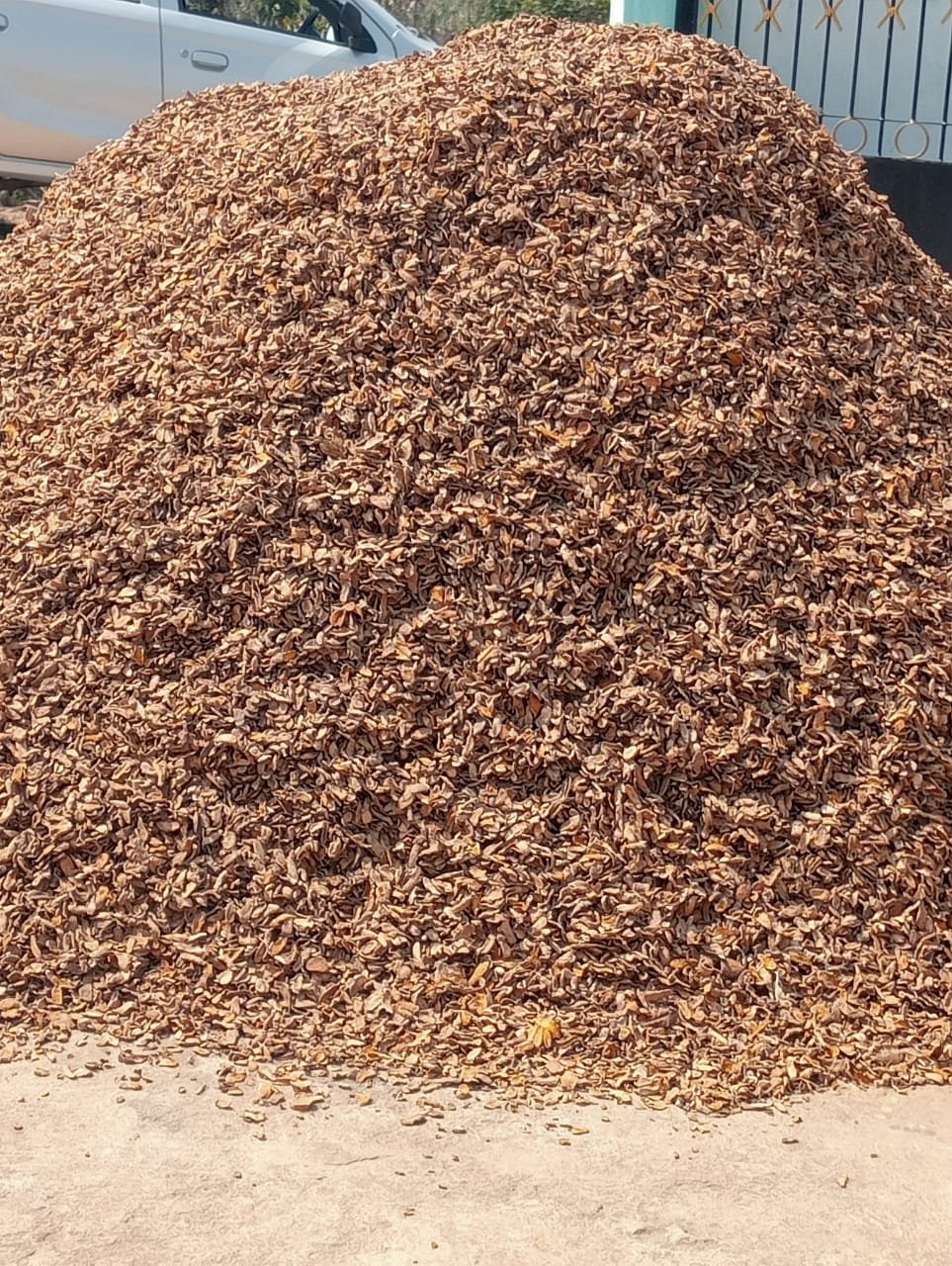

Think about the route a kilo of Lakadong takes. It is harvested, sliced, dried, sometimes polished, milled into powder, sold to a trader, bought by a packer and finally shipped by an exporter. Every one of those handoffs is a chance to blend in cheaper turmeric or to touch up the colour. Most people in the chain are honest. It only takes one who isn't.
If you export or import turmeric
For an importer, a lead finding means a recall with your name on it. For an exporter, being able to show where each lot came from is what separates genuine Lakadong from cheaper turmeric sold under the same name. Either way, the questions are the same:
- Is there a lab report for curcumin and for lead, done on the lot being shipped?
- Which farm or cooperative did it come from, and when was it harvested?
- Who handled it between that farm and the container, so the lab report is tied to the right lot?
The last point is the one that usually goes missing, and it is the one we work on at TraceGI. Each lot carries its own record from the collection point onwards, every person who handles it adds their step, and the importer, or their customer, can open the whole history by scanning a QR code on the pack. A curcumin figure means a lot more when you can see which farm it came from.
What a traceable lot gets you as a buyer
- Lab results you can trust. The curcumin and lead report is tied to the lot you actually received, not a sample from somewhere else.
- A smaller recall. If a test fails, you can trace and pull the one lot involved instead of everything on your shelf.
- A price you can defend. Show your own customers which farm and harvest a pack came from, so genuine Lakadong is not priced against look-alikes.
- Records ready for compliance. The EU, US and Japan all expect food to be traceable to its supplier. The lot's history is already written down.
Genuine Lakadong doesn't need help with its colour. It needs a way to prove it is the real thing.
Sources
- Forsyth et al. (2024), Evidence of turmeric adulteration with lead chromate across South Asia, Stanford
- Down To Earth: Lead in turmeric more than 200 times the limit in parts of India
- npj Science of Food (2026): Systemic drivers of toxic food adulteration, lead chromate in turmeric across eastern India
- Stanford GSB: Food safety policy enforcement and associated actions reduce lead chromate adulteration in turmeric (Bangladesh)
- Government of Meghalaya press release: GI tag for Lakadong turmeric